Your Receipt Might Contain More Personal Information Than You Think
A receipt may look harmless, but it can reveal more about you than you think. From where you shop and when you were there to what you purchased and how much you spent, a single receipt can contain personal information that you don't want falling into the wrong hands.
What Can a Receipt Tell Someone About You?
Most people think of a receipt as something you keep for a return, throw in the trash, or leave at the bottom of a shopping bag. But a receipt can contain more information about you than you might realize.
Depending on the purchase and the business, a receipt can reveal where you shopped, when you were there, what you purchased, how much you spent, and information connected to your payment. While none of this information may seem particularly concerning on its own, the combination can reveal more about your purchasing habits and personal life than you might expect.
A receipt doesn't usually contain something as obvious as a Social Security number, but that doesn't mean the information printed on it is meaningless. Your name, the store you visited, the date and time of your purchase, the items you bought, the amount you spent, your payment method, partial payment-card information, or loyalty information can all contribute to a picture of your shopping activity.
What Happens When a Receipt Falls on the Ground?
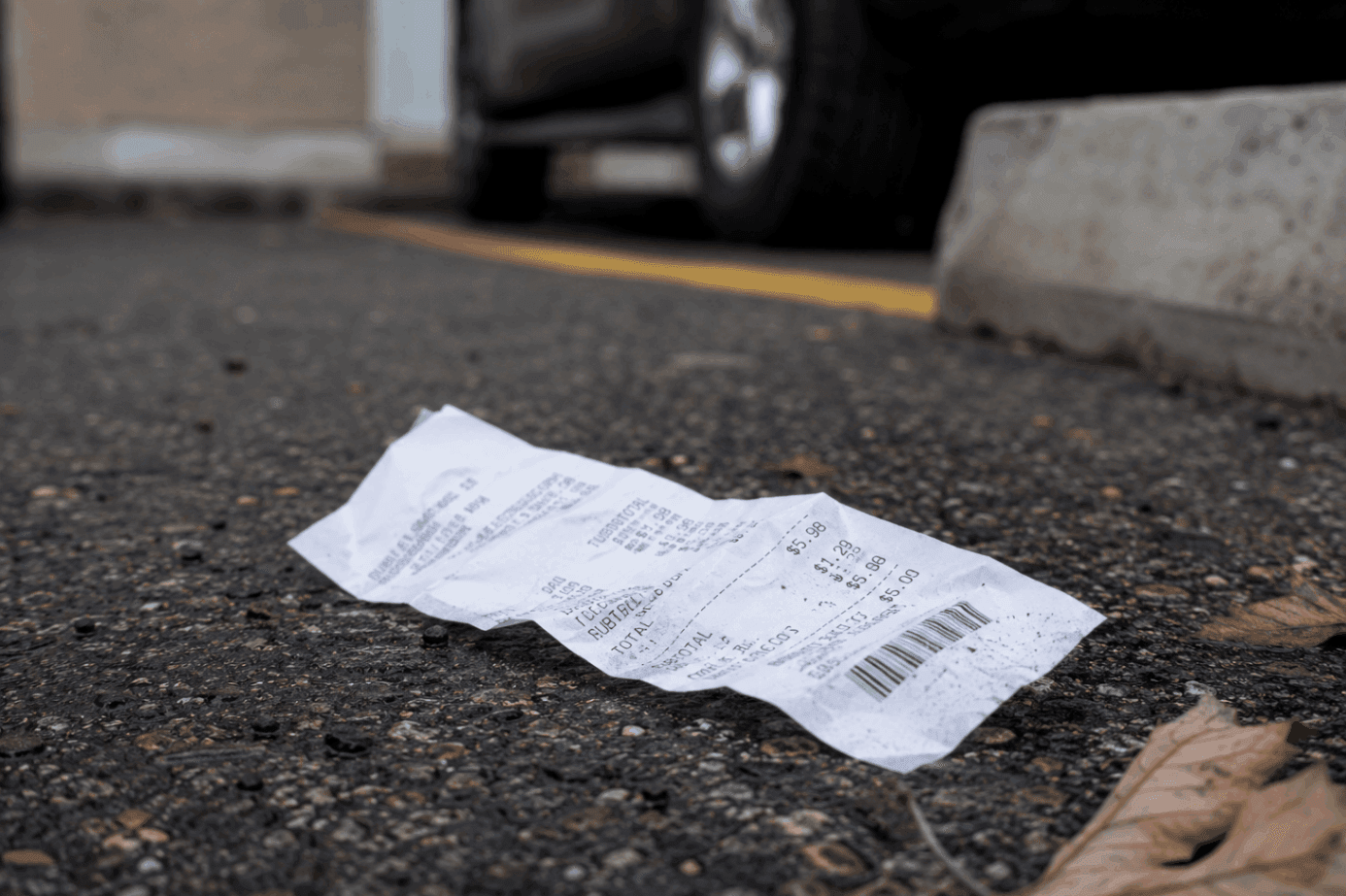
Consider a simple scenario: You leave a store, put your bags in the car, and accidentally drop your receipt in the parking lot. You may never notice that it's gone. Someone else, however, could pick it up and immediately see where you shopped, approximately when you were there, what you purchased, and how much you spent.
One receipt is unlikely to be enough to steal someone's identity. The bigger concern is what can happen when information from a receipt is combined with information from other sources. Even seemingly harmless details can become more revealing when they are connected to other information about you.
That's one of the biggest problems with paper receipts: once a receipt is out of your hands, you have very little control over who sees it.
Paper Receipts Are Easy to Lose
Paper receipts are convenient, but they're also incredibly easy to misplace. A receipt can end up on the ground outside a store, in a shopping cart, on a checkout counter, at the bottom of a purse or backpack, or buried in the trash.
You may intend to keep a receipt for your records, but there is always a chance that it gets lost before you ever need it again. Over time, this can leave pieces of your purchasing information scattered in places you don't control.
Your Receipts Can Create a Personal Information Trail
The bigger issue isn't necessarily one receipt. It's the trail created by dozens of receipts over time.
Think about what your receipts could reveal over the course of a month. Maybe you buy groceries at the same store every week, stop for coffee every morning, purchase a gift for someone, make a large purchase, or visit a particular store several times. Each receipt represents a small piece of information, but together, those pieces can create a much clearer picture of your habits, purchases, and spending.
The more receipts you leave behind, the more information you potentially expose. This is why it's worth thinking not only about what you do with a receipt after making a purchase, but also about how you receive and store your receipts in the first place.
There's a Better Way to Keep Your Receipts
The easiest way to prevent a receipt from being accidentally lost or left behind is to stop relying on a physical piece of paper in the first place.
That's where PapeX comes in.
Instead of taking home a paper receipt that can get lost, damaged, forgotten, or thrown away, PapeX lets you receive and organize your receipts digitally. Your receipts stay in one place, making them easier to find when you need them while eliminating the need to keep track of piles of paper.
Keep Your Receipts. Lose the Paper.
Going digital makes receipts more convenient while helping you keep better track of your purchase records. Instead of letting receipts collect in your car, purse, or trash, you can keep your purchase information organized and accessible in one place.
More importantly, you can make your receipts something you intentionally keep rather than something you have to remember not to lose.
Your Receipt Is More Than a Piece of Paper
A receipt might only be a few inches long, but it can contain a surprising amount of information about your life. Where you shop, what you buy, when you make purchases, and how much you spend can all contribute to a picture of your everyday habits.
The next time you leave a store with a receipt, think twice about where it ends up. Your purchase history is personal, and your receipts should be treated that way.
Keep your receipts. Lose the paper.